
Federal cloud modernization without mission disruption
The mission cannot pause for your migration. Here is the sequencing discipline that protects it.
Start with disposition, not destination
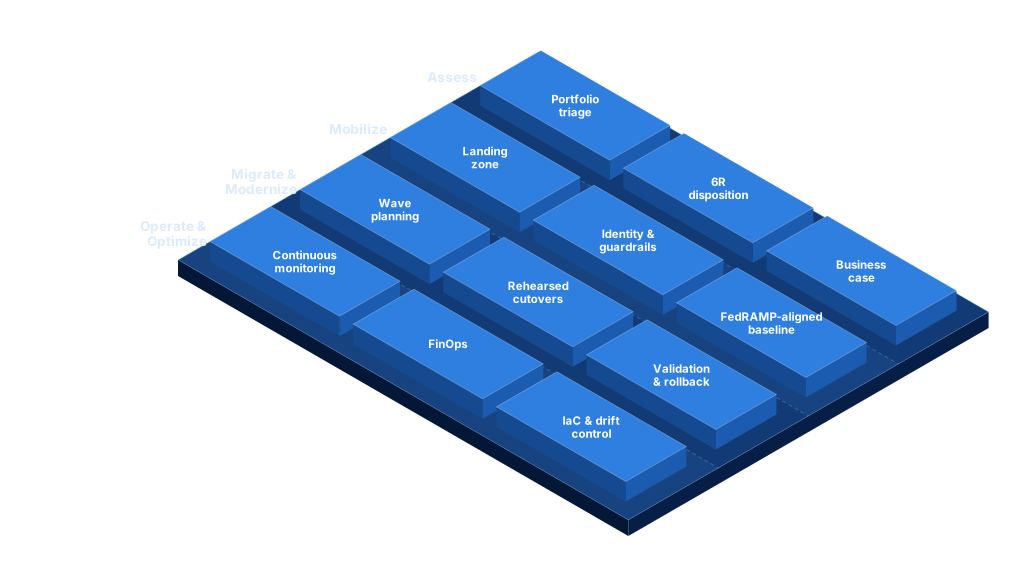
The first cloud decision is not which provider — it is an honest disposition of the portfolio. Which systems should rehost, which deserve replatforming, which should be replaced outright, and which should stay put for now? A defensible disposition prevents the two classic failures: lifting-and-shifting technical debt at cloud prices, and endless re-architecture that never ships.
Build the landing zone before the first workload
Security and governance retrofitted after migration cost multiples of what they cost up front. A federal-grade landing zone establishes account structure, identity integration, network boundaries, centralized logging, and guardrails aligned to your security baselines — so every subsequent workload inherits compliance instead of re-inventing it.
Migrate in waves, with rollback plans
Wave planning groups systems by dependency, risk, and mission calendar. Every cutover gets a rehearsal, a rollback plan, and explicit acceptance criteria. The measure of a good migration is not speed — it is that mission users barely noticed.
Treat ATO as part of the migration, not an afterthought
Control inheritance, evidence collection, and continuous-monitoring hooks should be designed into the landing zone and each wave. Done well, cloud migration improves your authorization posture — see our companion piece on continuous mission assurance.
Plan the operations handoff on day one
Modernization is only done when operations can run it: monitoring in place, runbooks written, staff trained, FinOps disciplines active. Budget for the handoff as a first-class deliverable — not a leftover.
The sequencing checklist
- Portfolio disposition with business-case per system
- Secure landing zone with guardrails and logging
- Wave plan ordered by dependency and mission calendar
- Rehearsed cutovers with rollback criteria
- ATO evidence pipeline built into the platform
- Operations handoff with runbooks, monitoring, and FinOps